Choosing the right decoration method for your branded merchandise
Embroidery, pad printing, UV printing, laser engraving and doming compared across cost, colour accuracy, durability and minimum order quantity.
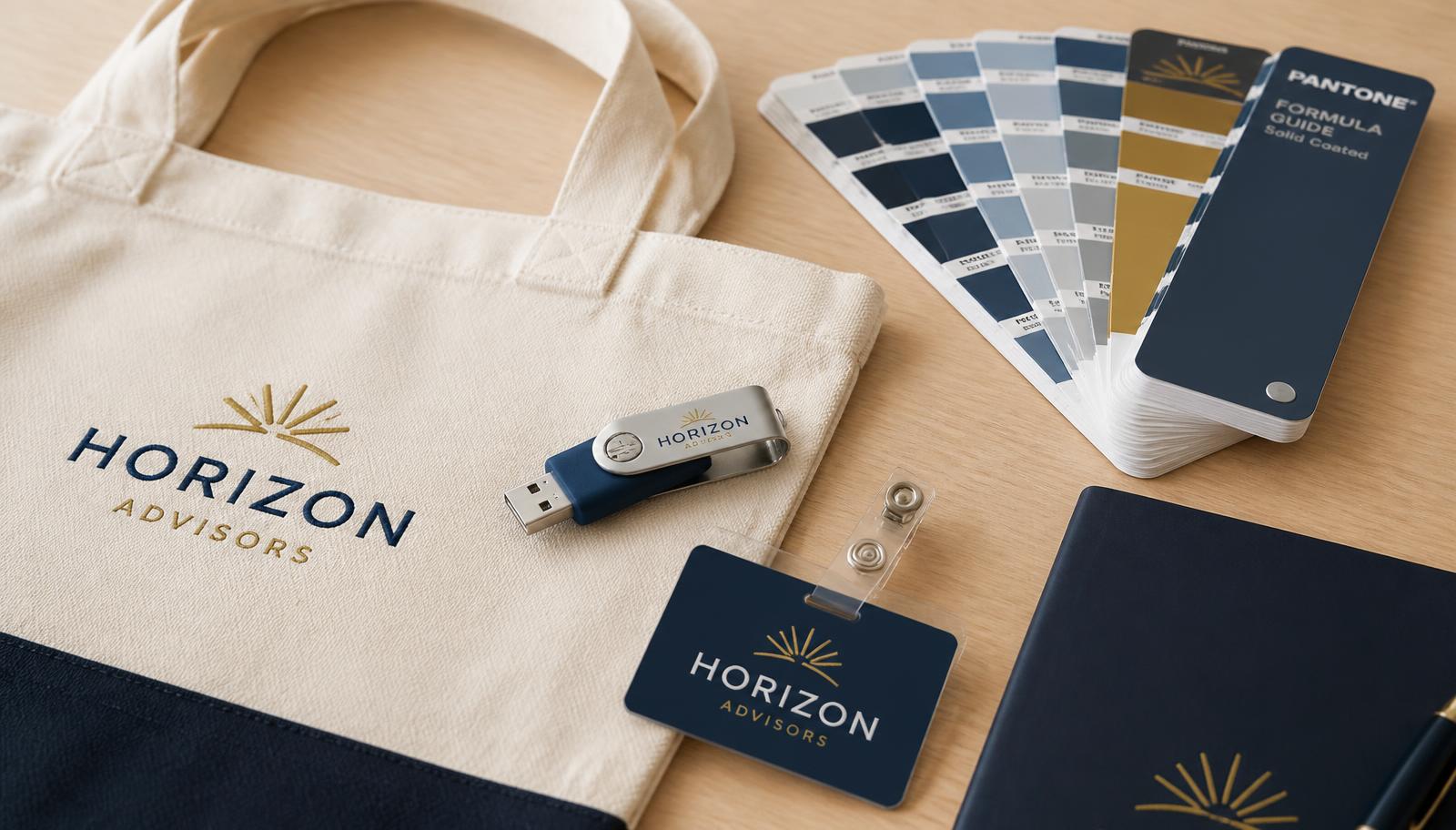
The same logo behaves very differently across substrates. Choosing decoration is really about matching the method to the material, the artwork complexity and the order size.
On cotton and canvas, embroidery signals quality and survives washing indefinitely, but it cannot hold fine detail below about 4 mm or reproduce gradients. Screen printing is the alternative for large, flat, high-contrast marks, and it becomes far cheaper than embroidery above 1,000 pieces.
On plastics such as USB housings and pens, pad printing remains the workhorse — one Pantone per pass, low tooling cost, and a 200-piece practical minimum. When artwork has more than three colours or a photographic element, UV printing replaces it at a slightly higher unit cost.
On acrylic badges, laser cutting defines the outline while UV printing carries the colour, often with a doming resin applied on top for a glossy raised finish that also protects the print. Doming adds roughly a day to the cycle for curing.
On metal and coated drinkware, laser engraving wins on durability and loses on colour. If the brand is only viable in its exact Pantone, use UV printing with a clear coat instead and accept a shorter cosmetic life.
Our practical rule for buyers: pick the method first, then design the logo lockup around it. Artwork designed for the process nearly always looks better than artwork forced onto it.