Custom embroidery on branded tote bags: what buyers should specify (with video)
Stitch counts, thread types, backing, digitising fees and MOQ — how to specify embroidery on canvas totes and apparel so the finished logo matches your brand.
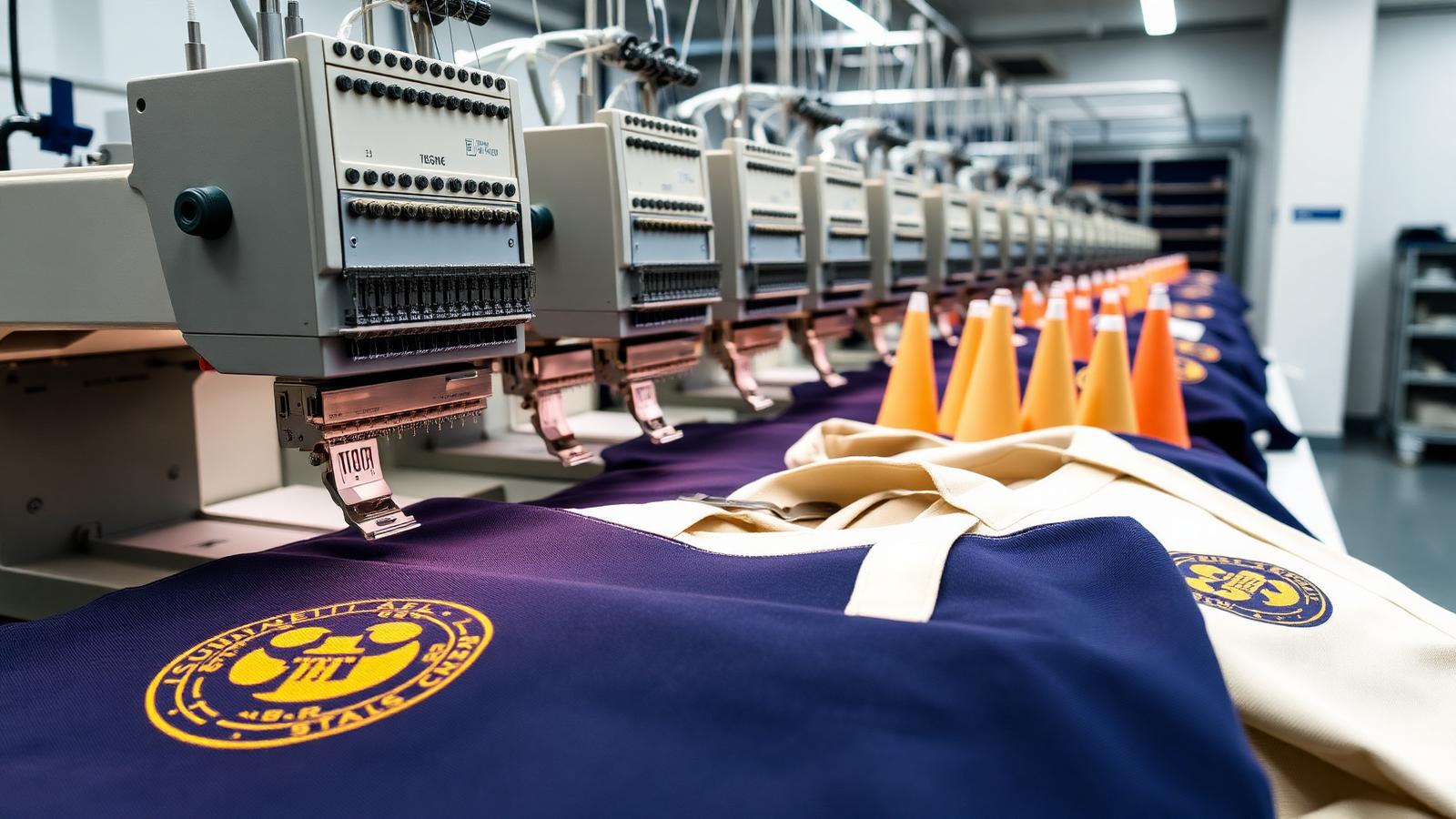
Embroidery is the decoration corporate buyers most often under-specify. A print is judged by colour; embroidery is judged by density, edge definition and how flat it sits after washing.
Everything starts with digitising: the logo is redrawn as a stitch path, not simply imported. Digitising is a one-time charge of roughly USD 20 to 40 per design, and it determines whether small type stays readable. Below about 4 mm letter height, we recommend converting text to a printed element instead.
Thread choice affects both look and cost. Polyester is the default for tote bags and workwear because it survives industrial washing and chlorine; rayon has a brighter sheen and suits presentation pieces that will not be laundered often. Metallic gold thread is available but runs slower and adds breakage risk on dense fills.
Backing and hooping matter on soft canvas. A cut-away backing keeps the logo from puckering on lightweight cotton; tear-away is fine on heavier 12 oz canvas. Getting this wrong is the most common cause of a wavy logo in the finished bag.
Cost scales with stitch count, not with size alone. A 6,000-stitch mark is far cheaper than a 20,000-stitch solid-fill block of the same width. If budget is tight, an outline treatment often reads better and costs less than a filled version.
Practical minimums: 300 pieces per design for embroidery on totes, 7 days for a stitched pre-production sample, and 15 to 20 days for bulk at 1,000 to 5,000 pieces.